India’s dependence on imported crude oil has never been a secret. The scale is uncomfortable. Over USD 132 billion moves out annually just to keep engines running. That dependency has consequences, not just economic but strategic.
What’s changed in recent years is not intent but execution. Ethanol fuel and broader bioenergy initiatives are no longer pilot ideas. They are being built into infrastructure, policy, and procurement cycles. The shift feels deliberate now.
JAKSON Biofuels sits within that shift, not at the edges. Their work in bioethanol and biofuel production is tied to real capacity, real geography, and very specific decisions that aren’t always obvious from the outside.
How is ethanol fuel being positioned within India’s renewable energy framework?
The short answer is simple. Ethanol fuel is being used to reduce crude dependency while building domestic capacity in renewable energy, sustainable energy and fuels.
The longer answer is less neat.
India’s ethanol fuel market was valued at $6,512 million in 2023. It is expected to reach $10,456 million by 2029, growing at 8.84%. Numbers like these usually look clean on paper. On the ground, they reflect a mix of policy pressure, supply chain adjustments, and industry hesitation.
The ethanol-blended petrol programme has pushed blending to 10%. It has also helped reduce imports by ₹24,300 crore in 2022–23. Production capacity has crossed 500 crore litres.
Still, capacity expansion has not been uniform. Some regions scaled quickly. Others struggled with feedstock alignment. That gap matters.
Where does bioethanol actually fit in industrial and energy systems?
Bioethanol is not just a green fuel substitute. It sits in multiple industrial layers.
It is used as a solvent. It feeds into chemical production. Ethylene, acetone, acetaldehyde. These aren’t peripheral applications. They are core to manufacturing ecosystems.
What complicates things is that ethanol usage competes across sectors. Fuel blending, industrial consumption, and even the beverage industry draw on overlapping supply chains.
This creates tension. Allocation decisions are not always straightforward.
That is where structured biofuel production becomes important. Not just more production, but controlled production.
Why are ethanol plants scaling now, not earlier?
Policy timing.
The central government’s interest subvention scheme offers a 6% subsidy for five years. That changes project viability significantly. Capital-heavy ethanol plants become easier to finance.
At the state level, the signals are clearer:
- Priority lending from banks
- Faster approvals
- Payment cycles are capped at 21 days
GST reduction from 18% to 5% also removed friction on bioethanol consumption.
Still, not every proposal translates into execution. Land, feedstock availability, and logistics continue to filter out weaker projects.
What is JAKSON Biofuels building in Balaghat, and why there?
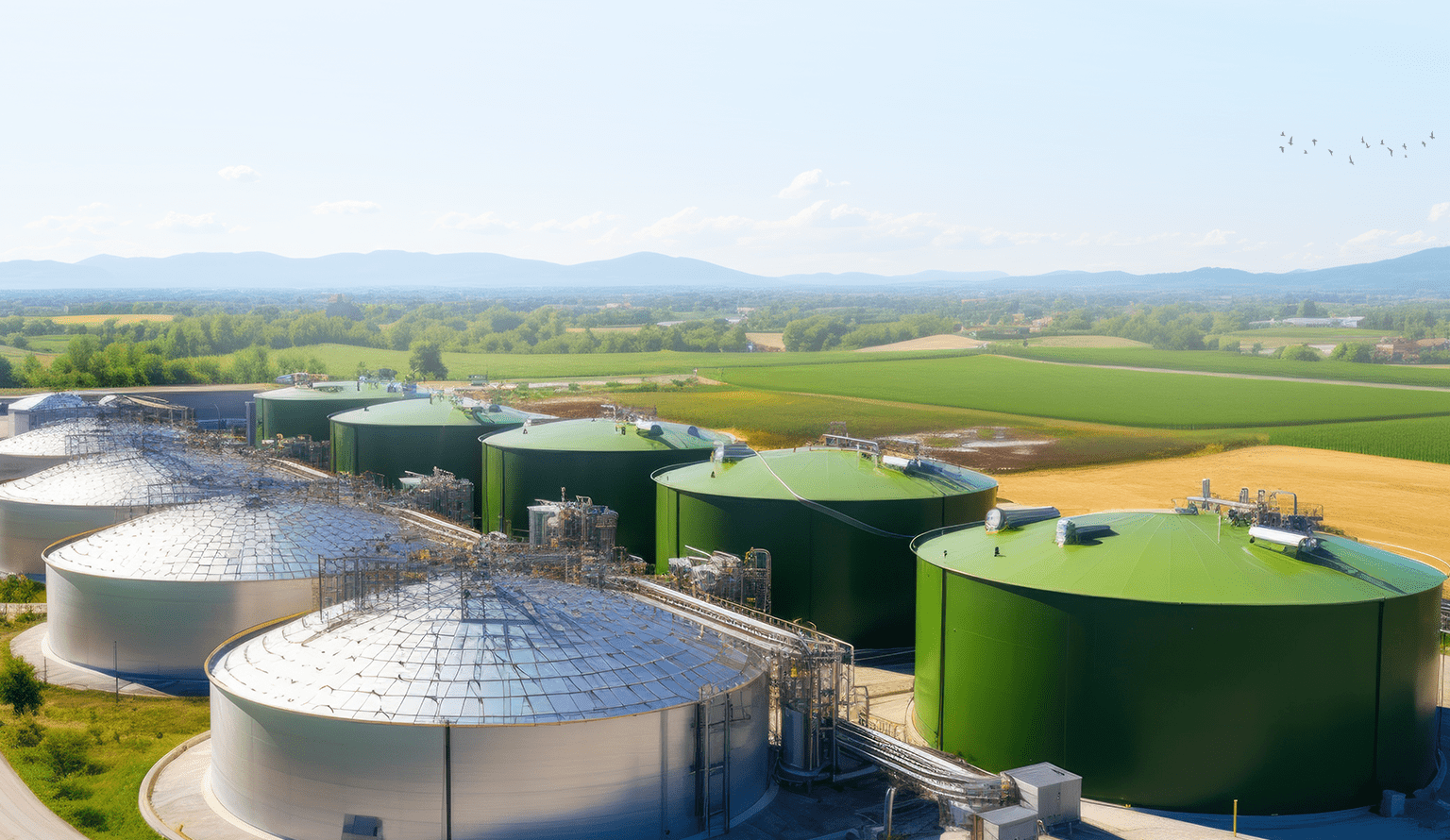
The immediate answer is a 150 KLPD grain-based ethanol plant.
The more relevant question is: why Balaghat?
Balaghat district in Madhya Pradesh produces around 10 lakh metric tonnes of rice annually. That matters. Not because rice is scarce, but because broken rice becomes viable feedstock.
JAKSON Biofuels uses broken rice and maize. Both are locally available. That decision reduces transportation dependency. It also stabilises input costs.
Balaghat connects well with Maharashtra and Chhattisgarh. Distribution becomes easier. Less time on the road. Lower logistics variability.
The plant is designed to scale to 450 KLPD. That expansion is already planned in phases. Not speculative.
What trade-offs shape biofuel production at this scale?
There is always a trade-off.
Using agricultural feedstock supports local economies. It also introduces variability. Crop output changes. Prices shift. Supply chains tighten without warning.
JAKSON’s choice of location reduces some of that uncertainty. It doesn’t eliminate it.
Another layer is environmental positioning. Ethanol is a green fuel. But production still consumes resources. Water, energy, and land use. The balance depends on how efficiently the plant operates.
This is where execution matters more than intent.
Ethanol fuel vs conventional fossil fuel systems
Not All Fuel Systems Behave the Same Way
| Parameter | Ethanol Fuel / Bio Ethanol | Conventional Fossil Fuels |
| Source | Agricultural feedstock like rice and maize | Imported crude oil |
| Supply Stability | Region-dependent, linked to crop output | Globally traded, price is volatile |
| Emissions | Lower greenhouse gas footprint | Higher carbon emissions |
| Cost Sensitivity | Influenced by local agriculture and policy | Influenced by global markets |
| Infrastructure | Expanding ethanol plant network | Established refinery systems |
| Strategic Control | Domestic production possible | Import dependent |
The comparison looks straightforward. It isn’t. Ethanol systems are still stabilising. Fossil systems are deeply entrenched.
How does this contribute to sustainable energy in real terms?
The move toward sustainable energy is not about replacing everything at once. It is about reducing exposure.
Bioenergy, especially ethanol, reduces reliance on imports. It supports local agriculture. It builds distributed production networks.
JAKSON Biofuels contributes by aligning production with local resource availability. That sounds simple. It rarely is.
Scaling from 150 KLPD to 450 KLPD will test operational consistency. Feedstock reliability. Distribution planning.
That is where most projects slow down. Execution again.
Final Thoughts
The conversation around renewable energy often becomes abstract. Targets, policies, projections. What matters more is what gets built.
JAKSON Biofuels is building capacity in ways that align directly with geography, agriculture, and policy timing. Not everything about ethanol fuel is resolved. Supply chains will fluctuate. Economics will shift.
But the direction is set.
India is not just adopting biofuel production; it is also developing it. It is restructuring parts of its energy system around it. Slowly, unevenly, but with intent.
FAQ
It replaces a portion of petrol through blending, which directly lowers the volume of imported crude required.
It is cost-effective, locally available, and does not interfere with primary food supply chains as much as whole grains do.
Its location, feedstock strategy, and phased expansion plan from 150 KLPD to 450 KLPD support long-term growth.