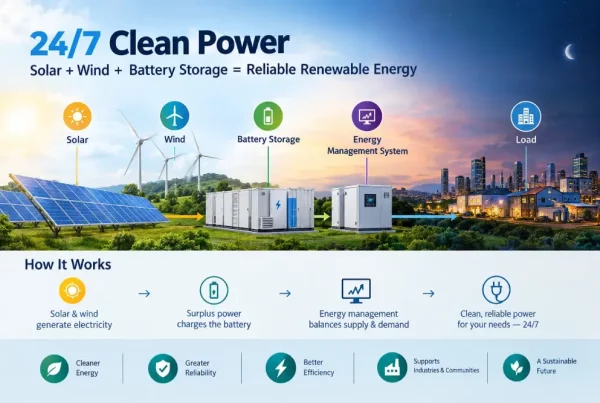
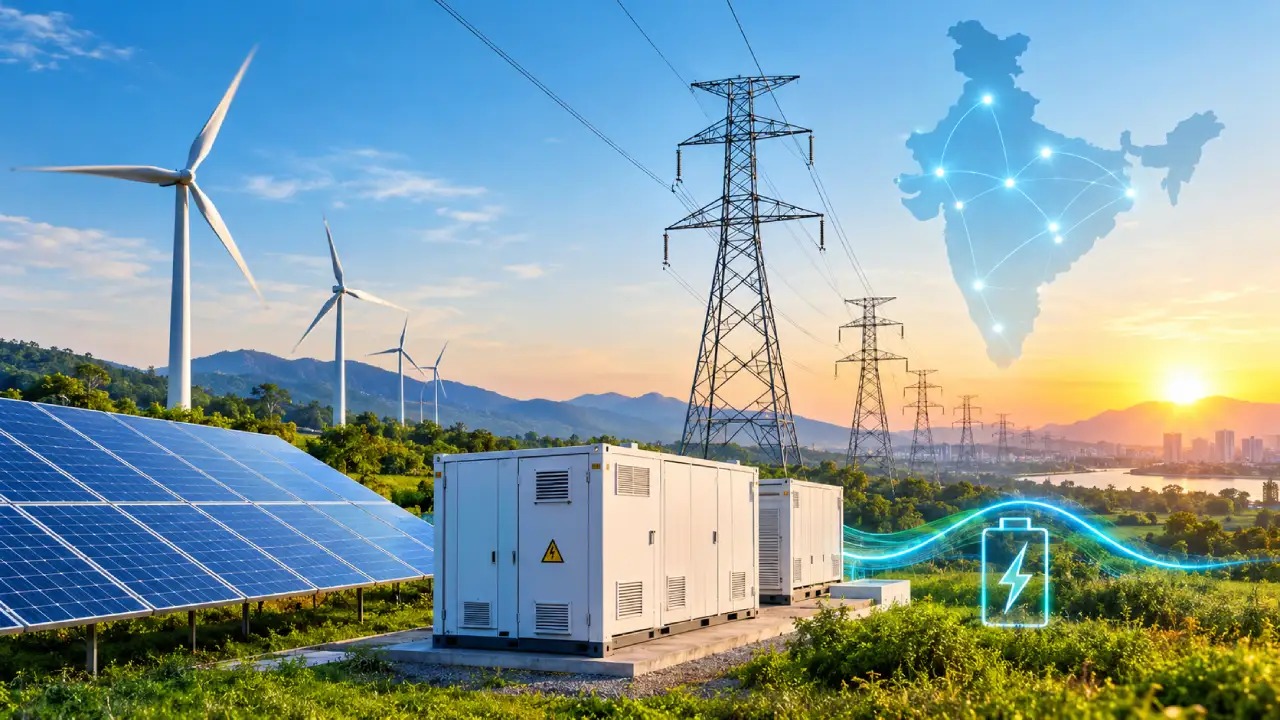
India’s power grid is being upgraded to accommodate more renewable energy, reduce transmission bottlenecks and improve electricity supply when solar and wind generation fluctuates. The Union Cabinet’s approval of the ₹1.86 lakh crore Green Energy Corridor Phase III (GEC-III) scheme on 30 September 2026 marks a significant step towards this transition. The programme aims to strengthen intra-state transmission infrastructure to facilitate the evacuation of up to 135 GW of renewable energy and support the deployment of 50 GWh of battery energy storage systems (BESS) by FY 2032–33. PIB
The announcement highlights an important development in India’s energy transition: expanding renewable generation is only part of the challenge. The electricity generated must also be transported, managed and delivered when consumers need it.
As India increases its reliance on solar and wind power, modern transmission networks and energy storage will become increasingly important for maintaining grid reliability and making better use of clean electricity.
Why Does India Need to Upgrade Its Power Grid?
India’s renewable energy capacity is expanding, but the infrastructure required to transmit and distribute electricity must develop alongside it.
Solar and wind power are generated according to weather conditions, time of day and the availability of natural resources. Electricity demand, however, does not always coincide with these generation patterns.
For example, solar generation is generally highest during daylight hours, while electricity demand can remain high or increase during the evening. Wind generation also varies depending on local weather conditions.
A modern power grid must be capable of handling these variations while maintaining a stable and reliable electricity supply.
Several factors make grid infrastructure upgrades essential.
1. Increasing renewable energy capacity
India is expanding its renewable energy portfolio to strengthen energy security and reduce dependence on fossil fuels. However, renewable power projects are often located in areas with strong solar or wind resources, which may be far from major electricity consumption centres.
Transmission infrastructure connects these generation locations to the wider electricity network.
Without sufficient transmission capacity, electricity generated by renewable energy projects may not be transported efficiently to where it is needed.
2. Transmission congestion and power curtailment
Transmission congestion occurs when the electricity network cannot accommodate the amount of power being generated or transferred through a particular route.
When the grid cannot absorb or transport available renewable electricity, generation may need to be reduced temporarily. This is known as power curtailment.
Strengthening transmission lines, substations and associated infrastructure can help reduce such constraints and improve the utilisation of renewable energy.
3. Changing electricity demand
Electricity demand is evolving with the growth of electric mobility, industrial development, digital infrastructure and urbanisation.
India’s National Electricity Plan (Transmission) envisages expanding the transmission network from approximately 5.09 lakh circuit kilometres in June 2026 to 6.48 lakh circuit kilometres by 2032. Transformation capacity is planned to increase from 1,478 GVA to 2,345 GVA over the same period. PIB
These planned upgrades will help the grid accommodate increasing demand while supporting the integration of renewable energy.
What Is the Green Energy Corridor Phase III Scheme?
The Green Energy Corridor is a government initiative designed to strengthen electricity transmission infrastructure and facilitate the integration of renewable energy into India’s power grid.
On 30 September 2026, the Union Cabinet approved Green Energy Corridor Phase III (GEC-III), which focuses on strengthening intra-state transmission systems and incorporating battery storage to improve grid flexibility.
The scheme has a total project outlay of ₹1,86,405 crore and is targeted for implementation by FY 2032–33.
Its major components include:
| Component | Planned investment or capacity |
| Intra-state transmission infrastructure | ₹1,36,378 crore |
| Battery energy storage systems | ₹50,000 crore |
| Planned renewable energy evacuation | Up to 135 GW |
| Battery storage deployment | 50 GWh |
| Total project outlay | ₹1,86,405 crore |
| Central financial support | ₹54,082 crore |
These figures are based on the official Cabinet announcement. PIB
The scheme is intended to strengthen the transmission network within states and improve the movement of renewable electricity from generation locations to consumers.
Its inclusion of battery storage is particularly important because it addresses not only the movement of electricity but also the timing of its availability.
How Will Grid Modernisation Support Renewable Energy?
Grid modernisation involves more than building additional transmission lines. It also includes upgrading substations, improving system monitoring, strengthening grid stability and incorporating technologies that enable electricity networks to respond to changing conditions.
These improvements can support renewable energy in several ways.
Improved transmission of solar and wind power
Renewable energy projects can generate electricity in locations with favourable natural resources. A stronger transmission network can help transfer this electricity to demand centres.
For example, electricity generated by solar projects in resource-rich regions can be transmitted to industrial and urban areas through interconnected power networks.
Improved transmission capacity can reduce the risk of network congestion and help renewable energy projects deliver more of their available generation.
Better grid stability
Solar and wind generation can change throughout the day. Grid operators must continuously balance electricity generation and consumption while maintaining system frequency and voltage within acceptable limits.
Modern grid technologies, including advanced monitoring systems, forecasting tools and grid-support equipment, can help operators manage these changes.
India has already been deploying technologies such as Flexible AC Transmission Systems (FACTS), renewable energy management centres and automatic generation control to support grid operation and renewable integration.
More efficient use of existing infrastructure
Grid upgrades can improve the utilisation of transmission assets by addressing bottlenecks and enabling electricity to flow more efficiently.
However, transmission expansion must be carefully planned. The location of renewable generation, electricity demand, storage systems and existing network constraints all influence how effectively new infrastructure can be used.
What Role Will Battery Energy Storage Systems Play?
Battery energy storage systems are an important part of India’s evolving power infrastructure because they can store electricity and release it when required.
A BESS typically consists of battery units, power conversion equipment, control systems and associated safety and monitoring infrastructure.
Unlike conventional electricity generation, which produces power from a fuel or natural resource, a battery stores electricity generated elsewhere and makes it available later.
1. Storing surplus solar electricity
Solar power generation is generally concentrated during daylight hours. When generation exceeds immediate demand or available transmission capacity, some electricity may not be fully utilised.
A battery can charge during periods when electricity is available and discharge later, subject to its capacity, operating conditions and system requirements.
This can help shift renewable electricity towards periods of higher demand.
2. Supporting evening electricity demand
Electricity demand may remain high after solar generation declines.
Battery storage can discharge electricity during these periods, helping provide additional flexibility to the power system.
This does not mean batteries can independently meet all evening demand. Their contribution depends on how much energy is stored, the duration of discharge, charging availability and the wider electricity mix.
3. Reducing renewable energy curtailment
When transmission congestion or a mismatch between generation and demand prevents renewable electricity from being used, strategically located battery storage may help absorb some of the available surplus.
The stored electricity can then be supplied when the network has sufficient capacity or when demand increases.
Storage cannot eliminate every transmission constraint. Its effectiveness depends on where the battery is installed and whether the relevant network has the capacity to transfer electricity at the required time.
4. Improving grid flexibility
Battery systems can respond to changing electricity requirements and provide services that help balance the grid.
Depending on their configuration and applicable grid requirements, they may support frequency regulation, peak-demand management and other grid services.
The proposed 50 GWh of storage under GEC-III is intended to help address renewable intermittency, transmission congestion, peak-hour curtailment and electricity demand during non-solar hours.
Transmission Infrastructure and Battery Storage: Why Both Are Necessary
Transmission infrastructure and battery storage address different but complementary challenges.
Transmission networks move electricity across locations. Battery storage shifts electricity across time.
Consider a solar power plant generating electricity during the afternoon.
If the transmission network has sufficient capacity, the electricity can be delivered to consumers elsewhere. If demand is lower than available generation, a battery may store some of the surplus for later use.
During the evening, the battery can discharge stored electricity, helping meet demand when solar generation is lower.
However, if the transmission network is persistently constrained, a battery alone cannot solve the problem. Similarly, additional transmission capacity does not automatically resolve every mismatch between renewable generation and electricity demand.
A reliable renewable energy system therefore requires coordinated investment in generation, transmission, storage, forecasting and grid management.
What Does India’s Grid Upgrade Mean for Businesses and Industries?
The modernisation of India’s electricity infrastructure can create opportunities for businesses that are increasing their use of renewable energy.
Greater access to renewable electricity
Stronger transmission networks can improve the ability to transport renewable electricity from generation centres to consumption locations.
This may support businesses exploring renewable electricity procurement through suitable arrangements, including open access, subject to state regulations, network availability and applicable charges.
Better integration of solar and storage
Commercial and industrial facilities are increasingly evaluating solar generation alongside battery storage.
A suitable combination can help businesses manage electricity consumption patterns, reduce exposure to peak-demand charges where applicable and improve the use of on-site renewable generation.
The financial and operational benefits depend on electricity tariffs, load profiles, system sizing, battery costs and local regulations.
Opportunities across the energy infrastructure sector
Grid expansion requires investment in transmission equipment, substations, energy storage, engineering, construction, monitoring and maintenance.
This creates opportunities across the power infrastructure value chain, including manufacturers, project developers, technology providers and service organisations.
For businesses operating in the energy sector, grid modernisation represents a broader shift towards electricity systems that must accommodate more renewable generation while remaining reliable and responsive.
What Challenges Could Affect the Grid Upgrade?
Although the programme represents a major infrastructure investment, its outcomes will depend on effective planning and execution.
Some important considerations include:
- Project implementation: Transmission lines, substations and storage projects must be delivered within planned timelines.
- Land and right-of-way requirements: Infrastructure development can involve land acquisition, permissions and coordination across jurisdictions.
- Coordination between generation and transmission: Renewable energy capacity and supporting grid infrastructure need to be planned together.
- Battery deployment and operation: Storage systems must be located, sized and operated according to actual grid requirements.
- Long-term maintenance: Transmission assets and storage systems require appropriate monitoring, maintenance and lifecycle planning.
The scale of the investment is significant, but the real measure of success will be how effectively the infrastructure enables renewable electricity to reach consumers.
The Road Ahead for India’s Renewable Energy Transition
India’s renewable energy transition is entering a stage where the quality and flexibility of power infrastructure are becoming as important as the addition of new generation capacity.
The Green Energy Corridor Phase III scheme signals a stronger focus on integrating transmission expansion with battery storage. Together, these investments are intended to improve renewable energy evacuation, manage fluctuations in generation and strengthen the electricity network.
For India, the next phase of the energy transition will depend on building an electricity system that can accommodate clean power reliably and efficiently.
At Jakson, the evolving energy landscape highlights the importance of integrated power solutions, renewable energy technologies and infrastructure that supports the changing needs of businesses and communities.
As India continues to modernise its grid, transmission infrastructure and battery storage will play an increasingly important role in enabling a more flexible and renewable-powered electricity system.
Frequently Asked Questions
1. Why is India upgrading its power grid?
India is upgrading its power grid to accommodate rising electricity demand, integrate more renewable energy, strengthen transmission capacity and improve the reliability of electricity supply.
2. What is the Green Energy Corridor Phase III scheme?
Green Energy Corridor Phase III is a government-approved programme to strengthen intra-state transmission infrastructure and deploy battery energy storage systems. It has a total outlay of ₹1,86,405 crore and aims to facilitate the evacuation of up to 135 GW of renewable energy and deploy 50 GWh of battery storage by FY 2032–33.
3. How does battery storage support renewable energy?
Battery storage can store electricity when generation is available and discharge it when demand increases or renewable generation declines. It can help shift solar electricity towards evening demand and provide flexibility to the power grid.
4. Can battery storage replace transmission infrastructure?
No. Batteries can shift electricity across time, but they cannot fully replace transmission networks that move electricity across locations. Both are needed to address different grid challenges.
5. How will grid modernisation benefit industries?
Grid modernisation can improve access to renewable electricity, support the integration of solar and storage systems, and strengthen the infrastructure needed to serve industrial electricity demand. Specific benefits depend on location, tariffs, regulations and project design.
6. When is Green Energy Corridor Phase III expected to be implemented?
The scheme is targeted for implementation by FY 2032–33, according to the Cabinet announcement of 30 September 2026.