Can Renewable Energy Provide Power 24 Hours a Day?
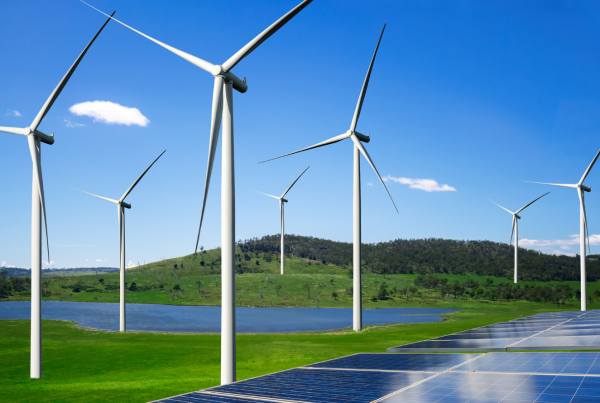
Solar and wind energy have become central to the global transition towards cleaner electricity. However, both resources are variable. Solar generation changes throughout the day, while wind generation depends on weather and location.
At the same time, homes, industries, data centres, hospitals and infrastructure require reliable electricity regardless of whether the sun is shining or the wind is blowing.
This has created a new focus in the renewable-energy sector: how can clean electricity be available when it is needed, not only when renewable resources are available?
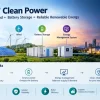
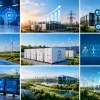
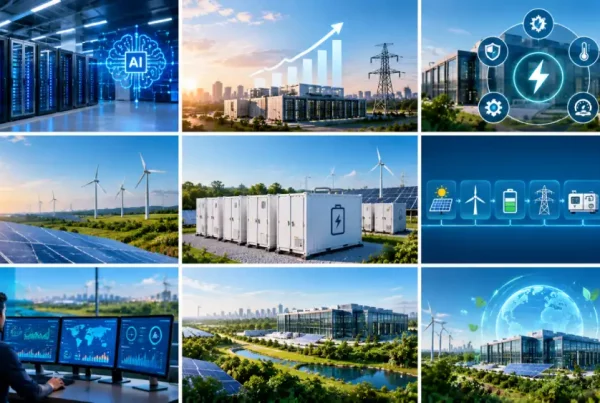
The answer increasingly lies in combining solar power, wind energy, battery storage and intelligent energy management.
Why Solar and Wind Need Energy Storage
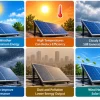
Solar power is highly productive during daylight hours, with generation typically reaching its highest levels around the middle of the day. Electricity demand, however, does not always follow the same pattern.
In the evening, when solar generation declines, electricity demand can remain high.
Wind energy presents a different challenge. Wind generation can vary depending on location, weather conditions and seasonal patterns.
This mismatch between renewable generation and electricity demand is one of the key reasons why energy storage solutions are becoming increasingly important.
How Battery Storage Makes Renewable Power More Flexible
Battery Energy Storage Systems can store electricity generated when renewable resources are available and release it when generation is lower or demand increases.
For example:
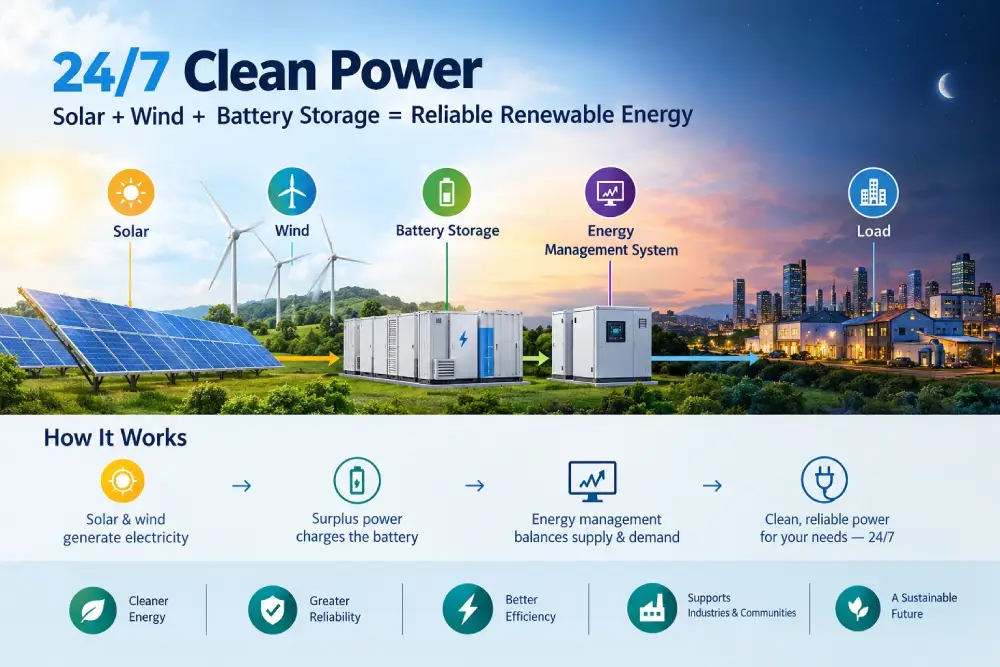
Daytime: Solar generates electricity → surplus power charges the battery.
Evening: Solar generation falls → battery supplies stored electricity.
Night: Wind, grid supply or stored energy can continue supporting the load.
This ability to shift electricity from one period to another is known as energy shifting or load shifting.
BESS can also provide rapid response, helping manage changes in demand and supporting power-system stability.
India’s Ministry of New and Renewable Energy currently cites a projected energy-storage requirement of 82.37 GWh in 2026–27, increasing to 411.4 GWh by 2031–32, including 236.22 GWh of BESS.
Solar + Wind + BESS: A More Reliable Renewable Energy System
Combining different renewable sources can improve the overall availability of clean power.
Solar and wind have different generation profiles. When combined with battery storage, surplus generation from one source can complement lower generation from another.
A simplified configuration looks like:
Solar + Wind → Battery Storage → Energy Management System → Load
The energy management system monitors generation, demand and battery availability to determine how electricity should flow.
This creates a more flexible renewable energy system capable of delivering power according to demand rather than simply according to generation availability.
What Is Round-the-Clock Renewable Energy?
Round-the-clock renewable energy, often referred to as RTC renewable energy, aims to provide renewable electricity according to a defined supply profile throughout the day.
Instead of treating solar or wind as standalone generation sources, an RTC system combines:
- Solar power
- Wind energy
- Battery energy storage
- Grid connectivity
- Forecasting
- Energy management systems
The objective is to make renewable electricity more predictable and dispatchable.
India’s regulatory framework is increasingly supporting combinations of solar, wind and energy storage for more reliable renewable power. The government has also issued guidelines for procurement of renewable energy with storage to enable firm and dispatchable supply.
How BESS Supports 24/7 Renewable Power
BESS can perform several functions within a renewable-energy system.
1. Energy Shifting
Batteries can store surplus solar energy during periods of high generation and release it later when demand increases.
2. Peak Demand Management
Stored energy can be discharged during periods of high electricity demand, helping reduce the amount of power drawn from the grid.
3. Renewable Energy Integration
Storage helps reduce the mismatch between renewable generation and consumption, allowing a greater proportion of renewable electricity to be utilised.
4. Backup Power
BESS can provide rapid backup during grid interruptions, depending on system configuration and available capacity.
5. Grid Support
Battery systems can respond quickly to changes in system conditions and support grid stability.
The Ministry of Power has highlighted applications including frequency regulation, voltage control and black-start capability for energy storage systems.
Why 24/7 Renewable Energy Matters for Industries
Industrial facilities often operate according to fixed production schedules. Interruptions can affect manufacturing processes, equipment and productivity.
For such users, simply installing a solar power system may not be enough.
A combination of solar power + wind + battery storage + grid supply can provide greater flexibility.
This can help industries:
- Increase renewable-energy utilisation
- Reduce peak electricity consumption
- Improve power reliability
- Reduce dependence on conventional backup
- Support sustainability goals
- Improve energy-management flexibility
For commercial and industrial consumers, the value of renewable energy is therefore shifting from simply producing clean electricity to delivering reliable clean power.
The Growing Importance of Energy Management
The hardware alone does not determine how effectively a renewable-energy system operates.
Energy management systems can continuously monitor:
- Solar generation
- Wind generation
- Battery state of charge
- Electricity demand
- Grid availability
- Peak-demand periods
- Energy consumption patterns
Based on these inputs, the system can determine when to charge or discharge batteries and how different power sources should be coordinated.
This becomes especially important as renewable-energy systems become larger and more complex.
India’s Growing Energy Storage Requirement
India’s renewable-energy expansion is creating a corresponding need for storage.
According to the Ministry of New and Renewable Energy, India’s projected BESS requirement is expected to rise substantially through 2031–32 as renewable capacity expands.
Recent industry data also shows rapid growth in battery storage deployment. Mercom India reported that India’s cumulative installed battery energy storage capacity reached 9.3 GWh by June 2026, with solar-plus-wind projects with storage already contributing to the country’s round-the-clock renewable-energy capacity.
This indicates a broader shift in the renewable-energy industry—from adding generation capacity alone to building systems capable of delivering power when consumers need it.
From Renewable Generation to Renewable Power Solutions
The next stage of the clean-energy transition is not only about generating more solar or wind power.
It is about integrating generation, storage, digital monitoring and grid infrastructure into a coordinated system.
A well-designed hybrid renewable energy system can combine different technologies according to the user’s electricity profile.
For a factory, this may mean solar + BESS.
For a data centre, it could involve renewable power procurement + BESS + grid connectivity + backup infrastructure.
For a remote site, a solar + battery + backup generator microgrid may provide greater resilience.
The right configuration depends on the load profile, renewable resources, required backup duration, grid conditions and operating objectives.
Conclusion
The renewable-energy industry is moving towards a model where clean power is expected to be not only sustainable, but also reliable and available around the clock.
Solar and wind provide the generation capacity, while battery storage helps bridge the gap between generation and demand. Intelligent energy management brings these components together and allows electricity to be used when it is needed.
As India’s renewable-energy capacity expands, energy storage solutions and hybrid renewable energy systems will become increasingly important in creating a flexible and resilient power ecosystem.
The future of clean energy is therefore not simply solar or wind in isolation. It is the intelligent integration of solar, wind, battery storage and energy management to deliver dependable 24/7 renewable power.
Frequently Asked Questions (FAQs)
1. What is 24/7 renewable energy?
24/7 renewable energy refers to a system designed to provide electricity continuously using renewable generation combined with technologies such as battery storage, energy management and grid integration.
2. Can solar power provide electricity 24 hours a day?
Solar panels generate electricity when sunlight is available. To provide power beyond daylight hours, solar can be combined with battery storage, wind generation, grid power or other complementary energy sources.
3. What is the role of BESS in renewable energy?
BESS stores electricity generated during periods of high renewable production and releases it when generation is lower or electricity demand increases.
4. Why combine solar and wind energy?
Solar and wind have different generation patterns. Combining them can diversify renewable generation and, when paired with storage, help create a more consistent electricity supply.
5. What are the benefits of 24/7 renewable energy for industries?
24/7 renewable energy can help industries increase clean-energy utilisation, manage peak demand, improve power resilience and support long-term sustainability objectives.
6. Is BESS necessary for round-the-clock renewable power?
BESS is one of the key technologies used to enable firm renewable power, particularly when solar and wind generation do not match the timing of electricity demand. The required configuration depends on the project’s generation profile and load requirements.