
Energy markets do not wait for clarity. They react to risk, often before the full situation is visible. The recent conflict in the Middle East made that evident again. Oil prices moved sharply over the course of hours, and gas prices followed. It wasn’t just about actual shortages. It was about the possibility of disruption.
For countries and businesses dependent on imported fuel, this kind of volatility is difficult to manage. Budgets stretch, planning becomes uncertain, and supply chains tighten without much warning. This is where the conversation around renewable energy systems and alternative energy solutions shifts from long-term thinking to something more immediate. Companies have been navigating this space for years, balancing conventional systems with newer approaches that reduce exposure to these shocks.
Why do oil prices and gas prices react so quickly to conflict?
Because supply routes are fragile.
The recent disruption linked to the Middle East conflict affected production and shipping simultaneously. The Strait of Hormuz, one of the world’s most critical crude transport routes, was closed. That single event tightened global supply expectations almost instantly.
Markets responded the way they usually do:
- Brent crude rose 11% to $103.14 per barrel
- West Texas Intermediate increased 8.9% to $89.49 per barrel
Both benchmarks briefly touched their highest levels since 2022. Earlier in the same session, Brent reached $119.50, and WTI climbed to $103.67 before easing slightly.
These movements are not purely driven by physical shortages. They reflect uncertainty. Traders price in risk faster than supply chains can respond.
What happens across the energy system when oil prices rise?
The effect spreads.
Crude oil sits at the centre of much of the global energy system. When oil prices rise, gas prices and natural gas prices often move in the same direction. Not always immediately, but the linkage is strong enough.
This creates a ripple effect:
- Transportation costs increase
- Industrial energy costs adjust
- Power generation expenses shift depending on the fuel mix
Even when the disruption is temporary, the financial impact can linger. Contracts, procurement cycles, and pricing agreements do not reset overnight.
How do governments respond when supply is disrupted?
They try to stabilise sentiment before supply.
Finance ministers from the Group of Seven began discussions around releasing strategic petroleum reserves. These reserves exist for situations like this. They act as a buffer.
Releasing reserves does not reopen shipping lanes or restart production. It adds a temporary supply to the system. That is often enough to calm markets in the short term.
Still, this approach has limits. It buys time. It does not solve structural dependency on transported fuels.
When supply routes fail, what does it reveal about energy systems?
It exposes concentration risk.
The closure of the Strait of Hormuz did more than disrupt shipments. It showed how much of the global system depends on a few critical routes. When those routes fail, alternatives are limited.
Producers had to cut or stop output. Shipping schedules collapsed. Supply chains tightened quickly.
This is not a rare scenario. It repeats in different forms whenever geopolitical tensions rise. Each time, the same question comes back. How much control do countries and businesses really have over their energy supply?
Where do renewable energy systems change the equation?
They remove one variable. Not all.
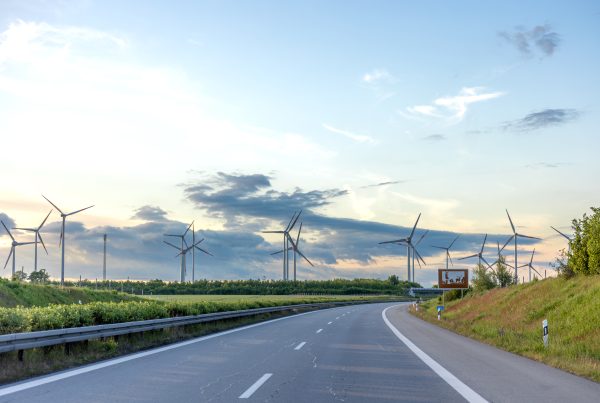
Renewable energy systems like solar and wind do not depend on shipping routes. Sunlight and wind are not transported through choke points. That alone reduces exposure to geopolitical disruption.
That does not mean they are simple replacements. Integration challenges remain. Storage, grid stability, and intermittency still need to be managed.
But from a supply risk perspective, they behave differently.
For companies like JAKSON Group, this is where hybrid energy solutions become relevant. Combining renewable energy with conventional systems reduces reliance on any single source. It does not eliminate risk. It distributes it.
A closer comparison: renewable energy systems vs fuel-based energy dependence
What Changes When Supply Risk is Reduced
| Parameter | Renewable Energy Systems | Fuel-Based Energy Systems |
| Supply Dependency | Local generation from natural sources | Dependent on global supply chains |
| Exposure to Conflict | Minimal direct impact | High sensitivity to geopolitical events |
| Price Stability | More predictable over time | Subject to oil prices and natural gas prices |
| Infrastructure | Distributed and scalable | Centralised and transport-dependent |
| Response to Disruption | Limited immediate effect | Rapid price and supply impact |
The distinction is not about superiority. It is about exposure. Renewable systems reduce reliance on external supply routes, which changes how risk is managed.
Why are energy solutions shifting toward diversification now?
Because single-source dependency is difficult to defend.
The recent spike in oil prices is not an isolated event. Similar patterns have played out before. Each time, the same vulnerabilities surface.
Businesses are adjusting their approach. Instead of relying entirely on imported fuels, they are combining multiple energy solutions. Renewable energy systems, hybrid models, and distributed generation are being considered together.
For JAKSON Group, this shift aligns with the structure of its portfolio. Different systems for different use cases. Less dependence on a single fuel source.
It is not a perfect transition. But it is a more controlled one.
Final Thoughts
Energy markets will continue to react to conflict. That is unlikely to change. Oil and gas prices will rise and fall in response to events often beyond end users’ control.
What can change is exposure.
The recent disruption around the Strait of Hormuz is another reminder that global energy systems are tightly linked to geopolitical stability. Renewable energy systems do not remove all challenges, but they reduce reliance on vulnerable supply routes.
That difference matters more during moments like this than during stable periods. And those moments seem to be occurring more frequently.
FAQ
When oil supplies are disrupted, overall energy markets tighten. This often pushes gas prices and natural gas prices upward due to linked demand and supply pressures.
It is a major global crude oil transit route. When it closes or faces disruption, global supply expectations shift immediately, driving oil prices higher.
Not entirely at present. They reduce dependency and improve stability, but integration and storage challenges still need to be managed