India’s power reliability challenge is no longer only about generation capacity. It is about where power is produced, how it is controlled, and how quickly systems respond when the grid fails. This is precisely where distributed energy becomes relevant, and why this conversation belongs with Jakson Distributed Energy, a business built around decentralized, site-specific power systems rather than grid dependence.
Jakson operates where reliability is engineered for real-world energy needs across industries, infrastructure, and remote operations. As India’s power demand grows, hybrid power solutions, microgrids, storage, and local renewables are becoming the backbone of dependable energy.”
Why Centralised Power Alone Is No Longer Sufficient
Traditional grid-centric power models were designed for predictable, centralized demand. India’s current energy reality is different. Load patterns fluctuate sharply, critical operations are increasingly decentralized, and grid disruptions, whether due to transmission constraints or regional imbalances, have tangible operational consequences.
This gap between grid design and real-world demand is what distributed energy addresses. By shifting generation and control closer to the point of consumption, decentralized energy systems reduce transmission risk and create localized resilience. Power reliability in India is increasingly being defined not by grid reach, but by system flexibility and response capability.
Distributed Energy: A System, Not a Single Technology
Distributed energy is often misunderstood as a single solution. In practice, it is a system-level approach that integrates multiple technologies into a coordinated architecture. Jackson’s distributed energy portfolio reflects this thinking.
At its core, distributed energy combines local generation, intelligent controls, storage, and backup sources into a unified framework. The objective is not just to generate power but to maintain continuity under variable conditions, load changes, fuel availability, weather variability, and grid instability.
Microgrids and Localised Control
Microgrids are one of the most direct expressions of decentralized energy systems. They are designed to operate either in coordination with the grid or independently when required. This capability is critical for sites where power interruption is not an option.
By integrating renewable sources, storage, and conventional generation within a controlled boundary, microgrids ensure operational continuity even during grid outages. For industrial facilities, campuses, and remote installations, this localized control directly translates into higher reliability and predictable power availability.
Hybrid Power Solutions and Operational Stability
Hybrid power solutions address a practical reality: no single energy source can guarantee an uninterrupted supply under all conditions. By combining solar generation, battery storage, and conventional gensets, hybrid systems balance sustainability with reliability.
These systems dynamically optimize source usage based on availability and demand. Renewable energy reduces fuel dependence, storage smooths variability, and backup generation ensures continuity. The result is a stable power environment that adapts rather than reacts, an essential requirement for consistent operations.
Battery Energy Storage as a Reliability Enabler
Battery energy storage systems play a central role in making distributed energy viable at scale. Storage allows excess generation to be retained and deployed when demand peaks or generation drops. This capability is fundamental to both grid-connected and off-grid systems.
From a reliability perspective, storage acts as a buffer against uncertainty. It enables seamless transitions between energy sources and supports an uninterrupted supply during disturbances. As distributed energy adoption grows, storage increasingly becomes the anchor that holds decentralized systems together.
Solar Integration and Proximity to Demand
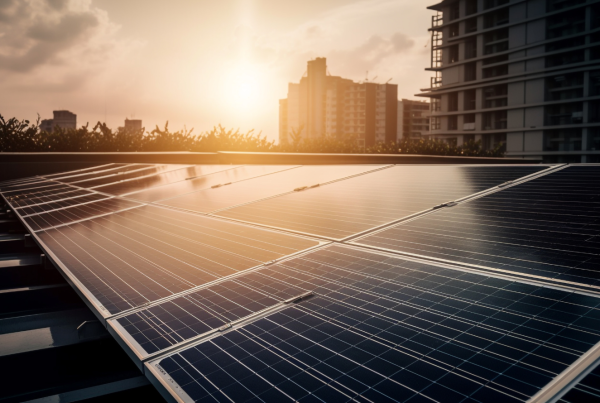
Solar rooftop and on-site renewable installations reduce the distance between generation and consumption. This proximity is critical. It lowers transmission losses, reduces grid dependency, and creates a predictable daytime supply for energy-intensive operations.
When integrated into a broader distributed energy system, rather than operating in isolation, solar becomes a reliability asset rather than a variable input. The emphasis shifts from standalone generation to orchestrated energy delivery.
What This Means for Power Reliability in India
The shift toward decentralized energy systems is changing how reliability is measured. Instead of asking whether the grid can deliver power, the question becomes whether a site can sustain operations under any condition.
Distributed energy improves resilience by decentralizing risk. Failures are contained locally rather than cascading across networks. For businesses and infrastructure operators, this translates into reduced downtime, controlled operating costs, and predictable performance.
Conclusion
India’s power reliability challenge cannot be solved by scale alone. It requires architectural change, from centralized dependence to decentralized control. Distributed energy systems deliver this shift by aligning generation, storage, and control with real operational needs.
Jakson Distributed Energy operates at the intersection of reliability and execution. It designs integrated decentralized systems combining microgrids, hybrid power solutions, storage, and renewable energy to support uninterrupted operations across India’s evolving energy landscape.
FAQ
By generating and controlling power closer to consumption, distributed energy reduces grid dependence and enables continuity during outages through local systems.
Microgrids allow sites to operate independently of the main grid, maintaining power supply during disruptions through integrated local generation and storage.
They combine multiple energy sources to balance variability, ensuring uninterrupted power even when one source is unavailable.