One of the problems that is becoming a big limiting factor in large-scale deployment of renewable energy is availability of land. The developers of utility projects usually face problems in accessing adjoining plots without disrupting farming or the immediate ecosystems. Meanwhile, the energy demand is still growing. This tension has pushed floating solar powerinto sharper focus.
Floating systems lower land pressure and increase generation capacity by using water bodies like dams and reservoirs. The momentum around floating solar projects in India signals a shift in how infrastructure is planned. Knowledge of new designs, integration schemes and technology enhancements will enable you to consider whether floating solar can be compatible with the long term sustainability and capacity objectives.
The Reason Why Floating Solar Is Gaining Ground.
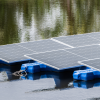
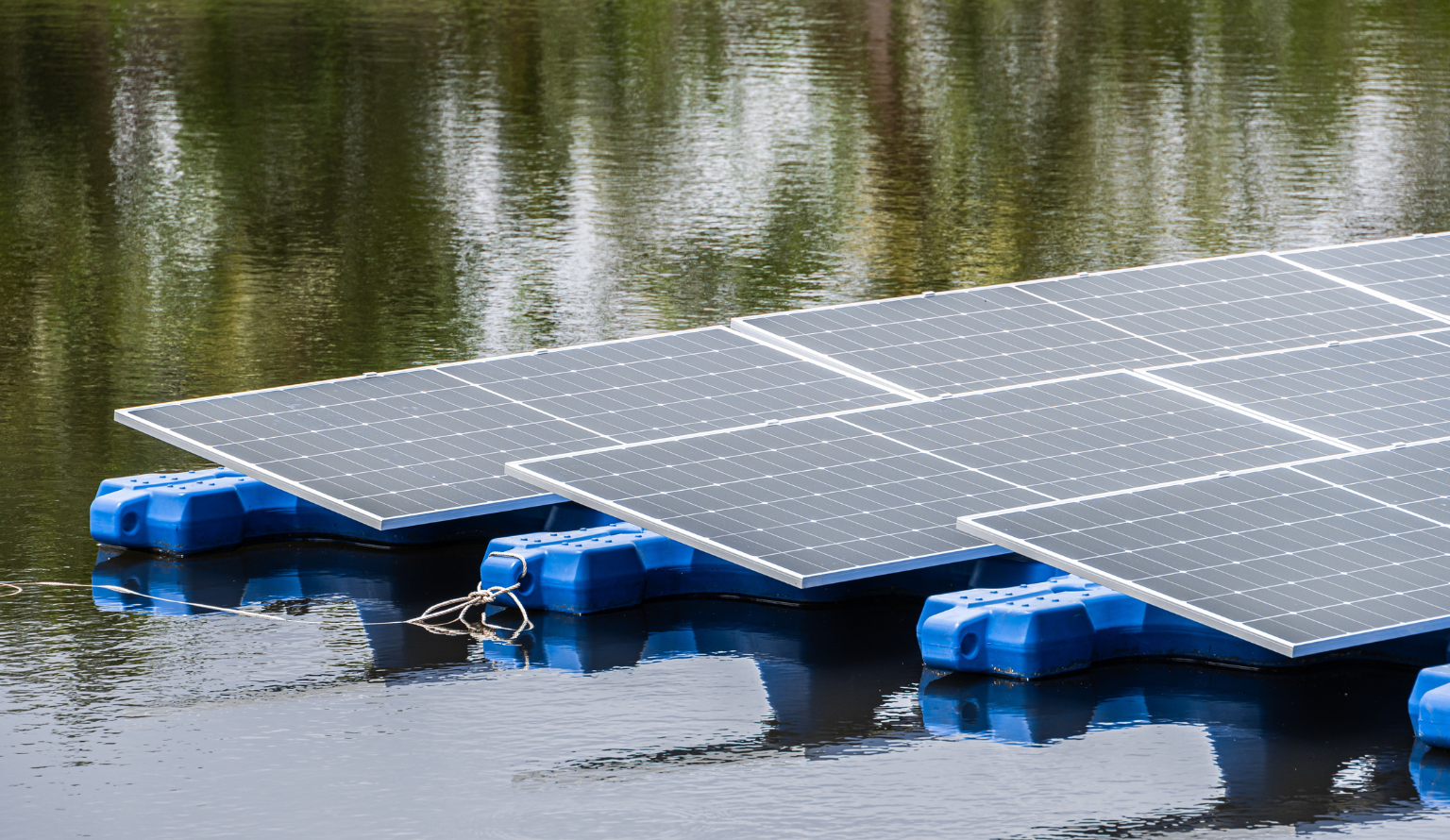
Floating solar farms mount photovoltaic systems on floating systems anchored on water. These floating photovoltaic systems generate electricity much like ground-mounted arrays but with additional operational advantages.
Water bodies assist in cooling the solar modules, which may increase performance. They also lessen evaporation in reservoirs and they bring environmental value.
In other countries such as India, where land acquisition can hold up projects, floating installation offers a new avenue of growing renewable capacity with no massive land footprints.
Growth of Floating Solar Projects in India
India has witnessed a steady increase in floating solar projects in India, particularly on government-owned reservoirs and hydropower dams. The government and utilities are looking into these installations in order to utilise the unused water surfaces to the maximum.
Deployment via a reservoir simplifies grid connectivity because transmission infrastructure is highly likely to be present in the regions around hydropower stations. This saves extra infrastructure expenses as well as speeding up the project schedule.
As part of broader renewable energy trends, floating solar is moving beyond pilot demonstrations into larger commercial capacities.
Reservoir Solar Plants and Infrastructure Integration
Reservoir solar plants are among the most common floating configurations. These systems are installed on the dam backwaters or the irrigation reservoirs and use the stable level of water and nearness to substations.
The major factors to be taken into consideration in the deployment of reservoirs are:
- Anchoring and mooring systems suited to water depth.
- Corrosion-resistant materials
- Safe access for maintenance
- Connection to already existing grid infrastructure.
Careful designs make certain that the impact of the environment is limited without so much power output being disrupted.
The organisations that have prior experience working with solar EPC and integrated energy systems are involved in such projects by ensuring the structural design suits the performance of the generation. The involvement of Jakson Group in the solar and distributed energy solutions industry makes it a part of the entire ecosystem which aids in such deployments.
Hybrid Solar Hydropower Models
One of the most promising innovations is hybrid solar hydropower integration. With this design, floating solar arrays are located on reservoirs which are connected to hydro power plants.
Hydropower turbines are able to remove or add generation according to the production of solar, making this a complementary system. Solar increases the amount of power in the grid during the brightest periods, thus saving water. Hydropower fills the gap when there is a decrease in the solar output.
This synergy will enhance the normal use of the plants and grid stability. It further enhances the business argument of floating installations through maximising the existing assets instead of creating new infrastructure completely.
A hybrid solution is most likely to become the core of the renewable expansion strategies in the future.
Offshore Floating Solar: The Next Frontier
While reservoir installations dominate current deployments, offshore floating solar is emerging as a new area of exploration. Large-scale arrays have other opportunities in the coastal areas that have calm water.
The offshore systems require highly sophisticated methods and anchors that can resist a saline environment and wave action. It involves more engineering complexity but there is great potential for size.
With the increase in technology and stabilisation in costs, offshore applications can play a significant role towards the country’s renewable capacity targets.
Technological Advances in Floating Photovoltaic Systems
Recent solar energy innovations are shaping the next phase of floating development. These include:
- Better float materials that are longer lasting.
- Expert monitoring systems fitted with water-based systems.
- Better remote performance monitoring.
- Combination with energy storage to have a smoother output.
Monitoring tools can be used digitally to track the performance and this makes sure that faults are detected promptly and maintenance can be scheduled optimally.
Firms that deal with distributed solar, EPC and energy storage aspects are appropriately positioned to implement such technological improvements in large projects. The existence of solar EPC and energy solutions in the portfolio of Jakson Group can be seen as an indication of the kind of integrated capability necessary in the changing project needs.
Environmental and Operational Considerations
Floating solar also has environmental benefits other than preserving land. Water evaporation can be minimised by lining sections of reservoirs with panels. They can also, in some instances, suppress the growth of algae.
Nevertheless, accountable planning is of paramount importance. The environmental impact assessment should measure the aquatic ecology, water consumption rates and structural integrity.
When properly designed, such systems do not conflict with other sustainability energy objectives, which do not undermine ecological balance.
The Role of Integrated Energy Providers
Providing successful floating projects needs co-ordination in design, procurement, and construction stages. It is important to have expertise in solar EPC, structural and system integration.
Organisations with a combination of distributed energy experience and renewable execution capability also make a contribution to this segment.
Aligning with Renewable Energy Trends
Floating solar reflects broader renewable energy trends focused on efficiency, space optimisation and hybridisation. The unconventional deployment approaches are necessary as the clean energy targets become more ambitious.
Conclusion
Expanding renewable capacity without straining land resources is a pressing challenge. Floating solar power addresses this by transforming underutilised water surfaces into productive energy assets. From reservoir solar plants to emerging offshore floating solar concepts, innovation continues to shape this segment.
Jakson is one of the organisations that is a part of the ecosystem that facilitates such developments with the built-in solar EPC and distributed energy features. Considerable planning and engineering will define whether floating solar will be effective in the next stage of the evolution of clean energy in India.
FAQ
Floating solar power systems need less land space to produce electricity while their water-based cooling systems enhance their performance and their ability to generate electricity and their capacity to reduce water loss from reservoirs.
Floating solar projects in India are growing, especially on reservoirs and hydropower dams, leveraging existing infrastructure for quicker deployment.
Floating photovoltaic systems use solar panels which generate electricity from their installation on floating platforms because water provides an extra cooling mechanism.
Hybrid solar hydropower operates by using floating solar panels together with hydropower systems to maintain grid stability through solar energy generation during daylight hours and hydropower generation during periods of low sunlight.
Reservoir solar plants involve using stable levels of water for the installation of solar panels which effectively produce energy with minimal environmental interference.