India receives some of the highest solar radiation on the planet. That’s not a small thing. Yet a surprisingly large portion of its solar supply chain still runs on imported components, imported cells, and imported wafers. It’s a contradiction that the Indian solar industry lives with every single day.
Now the sector is making a direct, unambiguous push. It wants ₹25,000 crore in government support to build what India currently lacks: a self-sufficient solar manufacturing base. This isn’t vague industry lobbying dressed up in committee language. It is a structured, data-backed ask with a specific number and a specific purpose.
India has committed to 500 GW of renewable energy capacity by 2030. That target will not build itself. It needs factories. It needs policy certainty. It needs solar manufacturing in India to move from partial assembly into full-stack domestic production. The momentum is already there. The question is whether the policy muscle shows up to match it.
The Rise of Solar Power in India
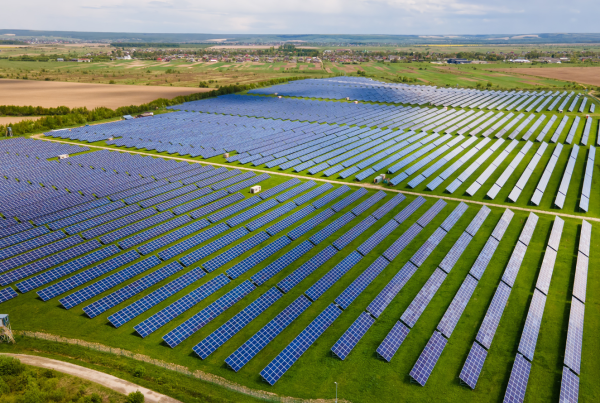
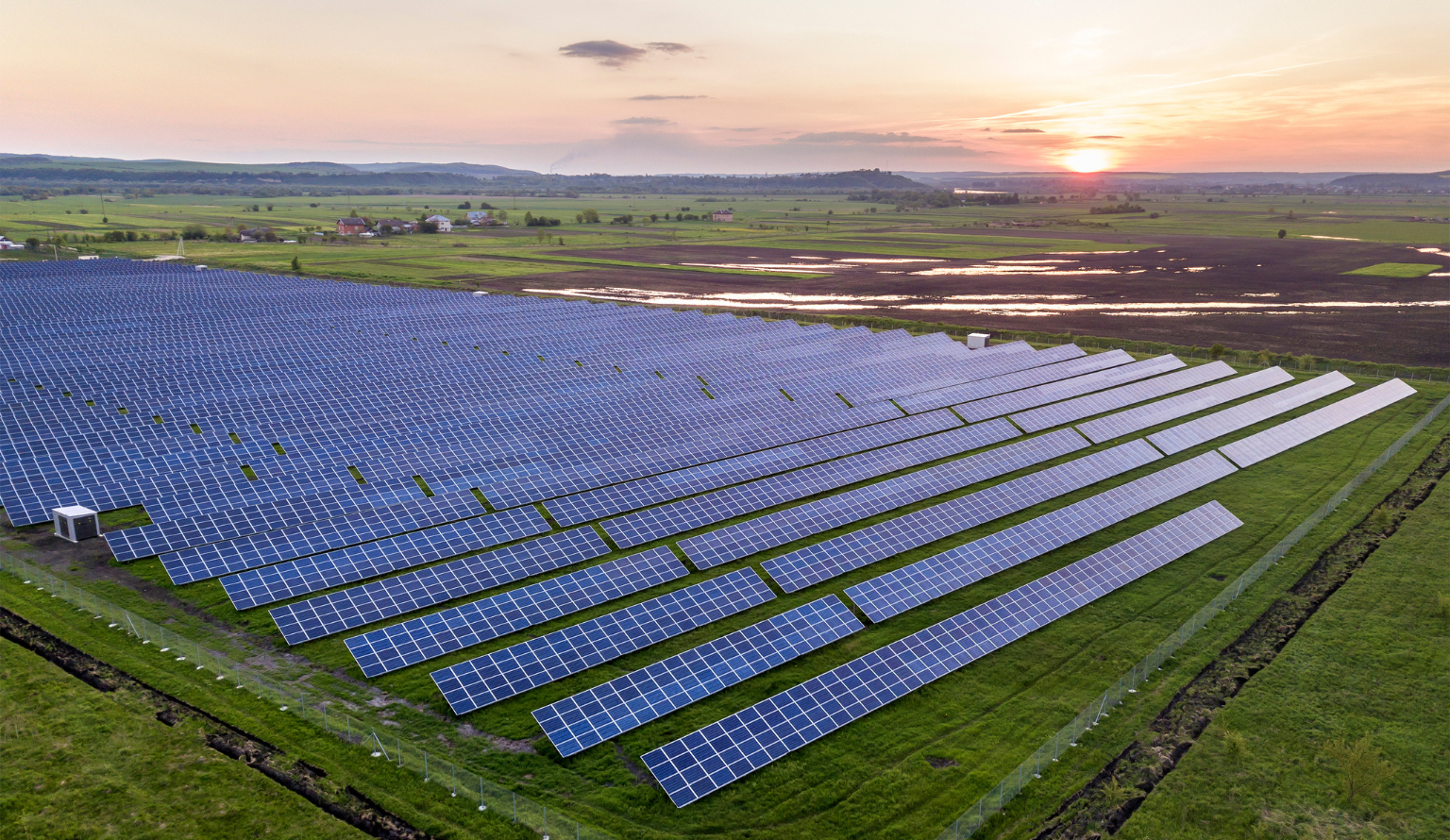
Ten years ago, India had just a few hundred megawatts of installed solar capacity. Today, that number has crossed 132.85 GW and is still climbing. State programmes, central government schemes, and a sharp rise in corporate sustainability commitments have pushed the Indian solar industry from a niche sector into a mainstream energy story. Solar is now showing up on rooftops in Mumbai, on farmlands in Rajasthan, on canal tops in Gujarat. Investment is flowing in. Project pipelines keep growing every quarter. The sector has moved from being a future ambition to being a present economic reality, and both the employment numbers and the installed capacity figures back that up.
India’s Solar Manufacturing Landscape
Solar manufacturing in India has grown; there is no question about that. The country today sits at roughly above 100 GW of annual module assembly capacity. That sounds impressive until you look at what’s upstream. Solar cell manufacturing remains thin. Polysilicon production is almost nonexistent domestically. Most manufacturers are essentially doing assembly work with imported components, which means the real value addition is happening somewhere else.
Renewable energy manufacturing in India has been trying to fix this through PLI schemes and the Approved List of Models and Manufacturers policy. Some companies have stepped up and made serious investments. But the gap between what India can make and what India needs keeps showing up in import bills, and that gap is the exact problem the ₹25,000 crore ask is trying to solve.
Why the Solar Industry is Seeking ₹25,000 Crore Support?
The number is large. But so is the problem it is trying to solve. Look at where the gaps actually are:
- Polysilicon production – almost entirely imported today, near-zero domestic output
- Wafer and ingot manufacturing – minimal domestic base, very few players have entered this segment
- Solar cell fabrication – capacity is growing, but it is well below domestic demand levels
- Module assembly – relatively stronger, though technology upgrades are still needed across many plants
Industry associations have clearly told the government one simple thing. Without targeted Viability Gap Funding, private investors will hesitate to enter upstream solar manufacturing segments. Margins stay tight, and returns arrive slowly. Chinese competition remains aggressive and heavily funded. That proposed ₹25,000 crore support can unlock larger private investment flows.
What is Viability Gap Funding (VGF)?
Think of VGF as the government stepping in to fill the gap between what a project needs to be viable and what the market can currently offer. It is a one-time grant, not a recurring subsidy. It does not distort the market over the long run. It just helps a capital-intensive project survive its early years until it achieves the scale needed to operate profitably.
In the context of renewable energy manufacturing in India, VGF is particularly relevant for upstream solar manufacturing. Setting up a polysilicon plant or a wafer manufacturing facility requires massive upfront capital with a very long payback period. No private investor is going to do that without some form of risk mitigation. VGF provides exactly that. The solar industry’s ₹25,000 crore ask is structured largely around this instrument, and the logic is sound. Get the first few plants built, demonstrate commercial viability, and private capital follows from there.
Strengthening India’s Solar Supply Chain
A solar supply chain is only as strong as its weakest link. India’s weakest links are right at the top of the chain, where the raw material processing happens.
| Supply Chain Stage | Current Domestic Status | What Needs to Happen |
| Polysilicon | Near-zero production capacity | New greenfield plants with VGF support |
| Wafers and Ingots | Very limited, few players | Fresh capital investment is needed urgently |
| Solar Cells | Growing but below demand | Scale-up investment and technology upgrade |
| Module Assembly | Reasonably developed | Quality improvements and capacity addition |
| Inverters and BOS | Moderate domestic presence | Stronger localisation push |
The Role of Government Policies
The government has introduced several policies that deserve acknowledgement from the industry. PLI schemes for solar PV modules have already attracted serious manufacturing interest. The ALMM list gives domestic producers a stronger positioning in government tenders. Basic Customs Duty also shifted the competitive field slightly toward local manufacturing.
Still, industry leaders say the support remains insufficient for long-term investments. Policy signals have changed more than once, which creates uncertainty. Incentive payouts faced delays, and timelines quietly moved again. For boards evaluating large solar manufacturing investments, this uncertainty becomes a serious decision barrier. Stability across several years is needed.
Jakson Solar: Building India’s Manufacturing Future from the Ground Up
Some companies talk about the opportunity. The Jakson Group actually went ahead and built it. Founded in 1947, the group has spent over 78 years in energy and infrastructure across India and 12 countries. We entered solar module manufacturing in India in 2016 and have since established a 1.2 GW manufacturing facility in Greater Noida that operates on a fully automated production line.
The Helia Series is our flagship solar product range, and it covers three distinct module technologies:
- Helia Plus Bifacial Modules capture up to 25% additional power through dual-sided rear-light capture, available in dual glass and transparent backsheet variants
- Helia Monofacial Solar PV Modules range from 400W to 600W using M10 MonoPERC half-cut cell technology for residential, commercial and utility applications
- Helia NXT – TOPCon Solar Modules use N-Type TOPCon technology to deliver up to 23.25% module efficiency with a 30-year performance warranty on glass-glass variants
Every Jakson solar panel leaves the automated Greater Noida facility using Tier-1 certified materials. The process stays precise, and production standards remain consistent. The modules carry certifications for salt mist resistance at Severity 6, ammonia resistance, and PID resistance.
Impact on India’s Renewable Energy Goals
India’s 500 GW renewable energy target is not just an energy target. It is an economic, environmental and security target wrapped into one number. Hitting it means roughly 450 million tonnes of CO2 avoided every year. It means energy cost stability for households and industries. It means hundreds of thousands of jobs in manufacturing, installation, operations and maintenance.
Renewable energy manufacturing in India sits at the centre of all this. When solar capacity gets installed using Indian-made modules, the economic value stays in India. Import bills come down. Local jobs multiply. Technology capability deepens. The proposed ₹25,000 crore support, if structured smartly and disbursed on time, could materially accelerate how quickly India reaches that 500 GW goal and how much of the economic value from that achievement stays inside the country.
Conclusion
India’s solar sector is not approaching the government with a handout. It is presenting a case for industrial policy investment that makes economic and strategic sense. Every major manufacturing power has done exactly this for industries it decided mattered.
₹25,000 crore targeted at domestic solar manufacturing capacity is, honestly, a bargain compared to the import bills India pays every year for solar inputs it should be making domestically. Companies like Jakson Group are already in motion, investing in manufacturing facilities, expanding into solar cell production, and building the kind of technology capability that makes industrial policy investment worthwhile.
The government has a clear opportunity in front of it. The India solar industry is ready. The companies are ready. The global market conditions are favourable. All that remains is for the policy support to show up with the same urgency that the sector has already demonstrated.
FAQ
The funding is intended to build upstream solar manufacturing capacity in polysilicon, wafers and solar cells, all of which India currently imports in large quantities. Without this support, private capital is unlikely to enter these high-risk, capital-intensive segments on its own.
India has around 60 GW of module assembly capacity annually, but very limited upstream manufacturing presence.
Jakson Group runs a 1.2 GW solar module manufacturing facility in Greater Noida, producing its Helia Series modules, including Bifacial, Monofacial and TOPCon variants.