
The chemical industry doesn’t have the best reputation when it comes to the environment. And to be fair, some numbers back it up. Chemical manufacturing accounts for roughly 5% of global greenhouse gas emissions. That’s not a small number. In India specifically, the chemical, petrochemical, and fertiliser sectors together pump out approximately 160 million tonnes of CO2 equivalent every single year.
But the industry isn’t sitting still. A push toward a genuinely sustainable chemical industry is already underway, and its picking up speed faster than most people realise. This blog unpacks what that transformation actually looks like, what’s driving it, and why the window to act is narrowing.
The Importance of Sustainability in Chemical Manufacturing
For most of the last century, production of chemical compounds followed one basic logic: extract, process, sell, repeat. Environmental costs were externalised. Emissions were someone else’s problem. That era is over.
| Decade | Sustainability Focus |
| 1960s-70s | Basic pollution control and safety |
| 1980s | Voluntary environmental frameworks |
| 1990s-2000s | Regulatory compliance, cost reduction |
| 2010s | Carbon emissions, climate accountability |
| 2020s | Net-zero targets, ESG integration, social value |
What’s changed most fundamentally is that sustainability in the sustainable chemical industry is no longer a PR exercise, it’s a business condition. Companies that can’t demonstrate a credible decarbonisation path are increasingly finding themselves locked out of contracts, capital, and customer relationships.
Innovation: The Engine Powering Sustainable Chemistry and Engineering
If there’s one thing that gives reason for optimism, its innovation. The chemical manufacturing industry has historically been slow to change its core processes. But the pace of innovation right now is something different.
Sustainable chemistry and engineering is not just an academic phrase. It’s reshaping how facilities are designed, what goes into the reactor, and how energy flows through the plant.
1. Renewable Raw Materials
Traditional feedstocks are fossil-based. Expensive over time, emissions-heavy, and increasingly politically inconvenient.
The alternatives are growing fast. Bio-based feedstocks sourced from agricultural waste, algae, and plant biomass are already in industrial use. Recycled feedstocks take post-consumer plastic and convert them back into usable chemical inputs. And perhaps the most interesting development – CO2 itself is being turned into a feedstock. That’s right, the emission becomes the raw material. This is the kind of circular thinking that makes sustainable chemicals a real possibility and not just a talking point.
2. Green Chemistry
Green chemistry sounds a little academic. But its principles are actually quite practical.
The basic idea is to design chemical products and processes that don’t produce hazardous substances in the first place rather than trying to clean them up afterwards. Here’s what that looks like in practice:
- Using catalysts to run reactions more efficiently and with less waste
- Applying atom economy principles so that most of what goes in comes out as product
- Microwave-assisted synthesis that cuts energy use significantly
- Switching to green solvents or removing solvents from the process entirely
The result is a production of chemical output that’s safer for workers, lighter on the environment, and often cheaper to run over the long term.
3. Decarbonisation Strategies
The chemical industry sits in a difficult category: hard-to-abate. Its emissions don’t come just from burning fuel. Some come directly from the chemistry itself. That’s what makes this sector uniquely challenging.
Tackling it requires multiple levers, not one silver bullet.
Electrification of high-temperature processes is one route. Not easy, but increasingly viable as electricity grids get cleaner.
Green hydrogen is perhaps the most promising option for processes where electrification won’t work. Produced via electrolysis from renewable power, it can replace fossil-based hydrogen that’s currently used extensively in ammonia and methanol production.
Carbon Capture, Utilisation and Storage (CCUS) intercepts CO2 at the source, before it ever reaches the atmosphere. The captured carbon can be stored underground or turned into chemicals.
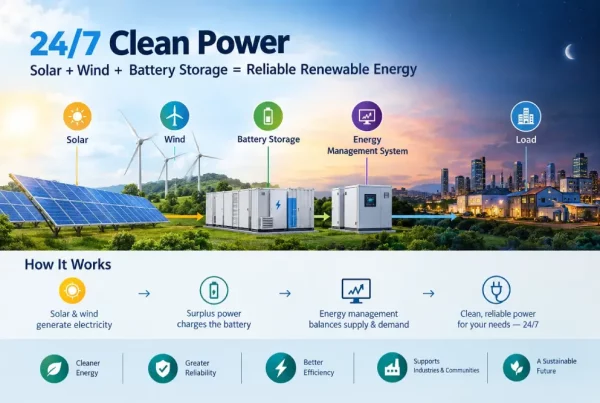
Renewable energy across plant operations is arguably the fastest and most cost-effective intervention available right now. Solar, wind, biomass – each has a role.
Energy efficiency upgrades shouldn’t be underestimated either. Heat recovery systems, better insulation, process optimisation – these things add up significantly across large facilities.
Integration: Building a Sustainable Supply Chain for Chemicals
Here’s something that often gets overlooked. You can clean up one factory completely and still have a deeply unsustainable business. Because 70 to 75% of GHG emissions in the chemical manufacturing industry come from the supply chain, not the facility itself.
So integration across the value chain is not optional. It’s central.
1. Supply Chain Sustainability
Sustainable chemicals start upstream. That means evaluating suppliers not just on price and reliability but on their environmental and social performance. It means mapping Scope 3 emissions with actual data, not estimates. It means supplier codes of conduct that reference frameworks like the UN Global Compact, and climate risk assessments that identify vulnerabilities before they become disruptions.
This is hard work. There’s no shortcut. But companies that build it right are creating supply chains that are genuinely more resilient, not just greener on paper.
2. Circular Economy Principles
The old model was simple: take raw materials, make something, throw away what’s left. That model has no future in a net-zero world.
Circular economy thinking flips the script entirely. Design out waste from the start. Keep materials in use for as long as possible. When something does reach the end of life, feed it back in. For the sustainable chemical industry, this translates to investing in chemical recycling infrastructure, rethinking packaging and formulation, and treating industrial by-products as sellable inputs rather than disposal problems.
3. Life Cycle Assessment (LCA)
LCA is less glamorous than some of the other strategies here. But it might be the most useful analytical tool the sustainable chemistry and engineering community has.
By mapping the full environmental impact of a product from raw material extraction all the way through to disposal, LCA reveals where the actual emission hotspots are. That’s where intervention delivers the most return. It also satisfies regulators, satisfies procurement teams, and supports eco-design decisions with real data rather than guesswork.
Conclusion
The chemical manufacturing industry over the next ten to fifteen years will be defined by one central challenge – can it grow without growing its emissions?
Technologies like green hydrogen, CCUS, and advanced bio-feedstocks are moving from pilot scale to commercial reality faster than expected. Sustainable chemistry and engineering is attracting talent, capital, and policy support in ways that were unimaginable even a decade ago. The companies that move early will have structural cost and compliance advantages. The ones that wait are borrowing trouble.
FAQ
Unlike most sectors, chemical manufacturing emits GHGs both from energy consumption and from the chemical reactions themselves, making electrification alone insufficient without pairing it with strategies like CCUS and green hydrogen adoption.
Solar directly replaces fossil-fuel-based grid electricity across plant operations, cutting Scope 2 emissions at relatively low cost and with fast deployment timelines compared to most other decarbonisation interventions.
It reduces dependency on virgin fossil-derived feedstocks by keeping materials in use longer and feeding industrial by-products back into production cycles, lowering both input costs and the emissions tied to raw material extraction.